










ARTICLES
Articles – Master's Programme in Theory of Law and Interdisciplinary Legal Studies
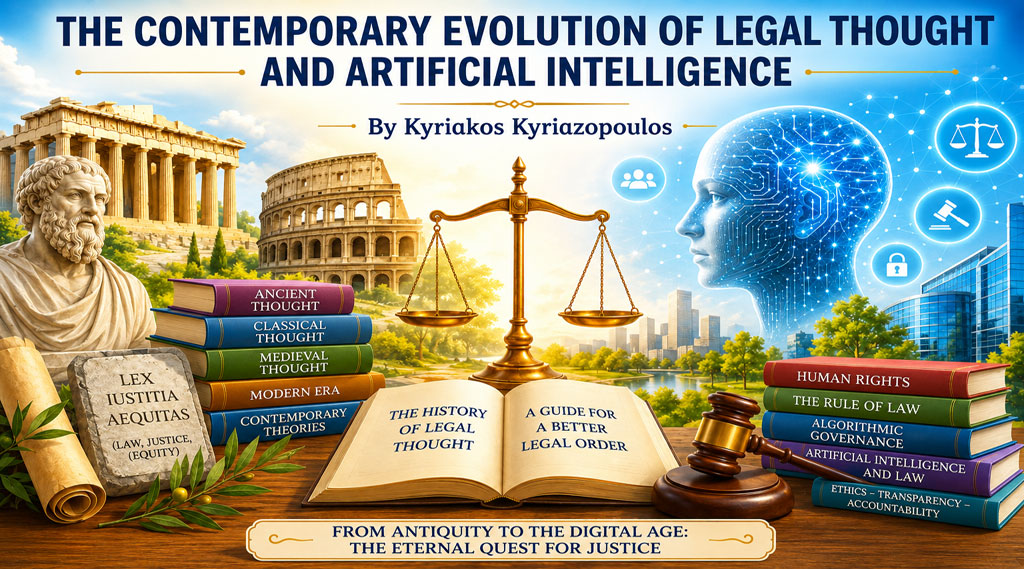
The historical evolution of legal thought and artificial intelligence
The emergence of artificial intelligence undoubtedly constitutes one of the most significant developments of the contemporary era. The speed with which algorithmic systems are entering public administration, the administration of justice, the economy, science, and decision-making more generally has created the impression that humanity is confronted with an entirely new phenomenon, one that requires the development of wholly new legal instruments and unprecedented theoretical approaches. Indeed, the discussions surrounding the liability of autonomous systems, the protection of personal data, algorithmic transparency, the prohibition of discrimination, the automation of administrative functions, and the support of judicial decision-making through artificial intelligence systems appear, at first sight, to constitute an entirely new field of knowledge, detached from the historical evolution of legal science.
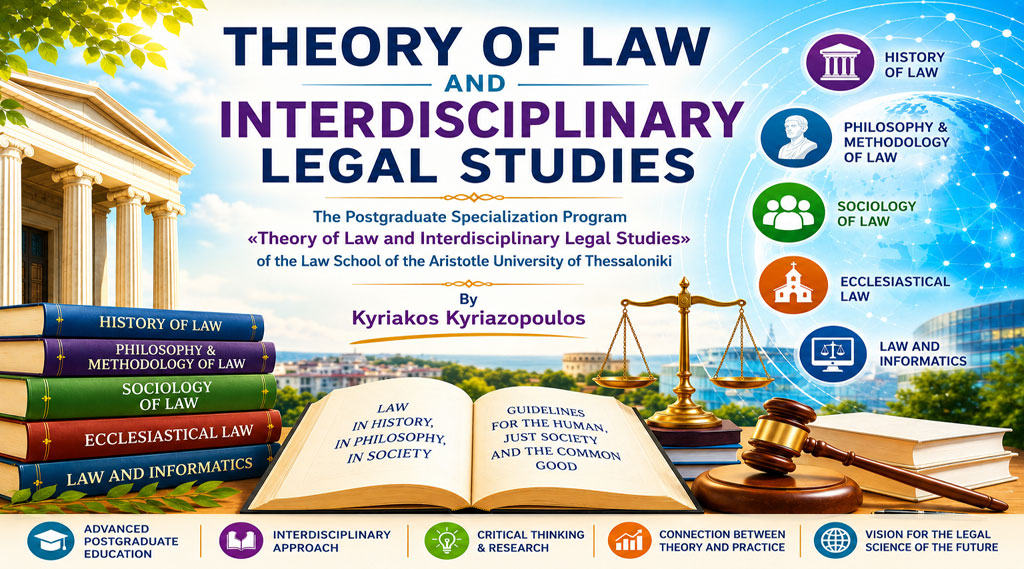
Theory of Law and Interdisciplinary Legal Studies – Postgraduate Specialisation
Contemporary legal science is undergoing a period of profound transformation. The social, political, technological, and cultural developments of recent decades have demonstrated that law can no longer be studied exclusively as an autonomous system of legal rules, nor can it be interpreted solely through the traditional doctrinal methods of legal scholarship. A proper understanding of the nature of law requires an examination of its historical origins, its philosophical foundations, its social functions, its relationship with religion and worldviews, as well as the new forms of regulation emerging within the digital society.
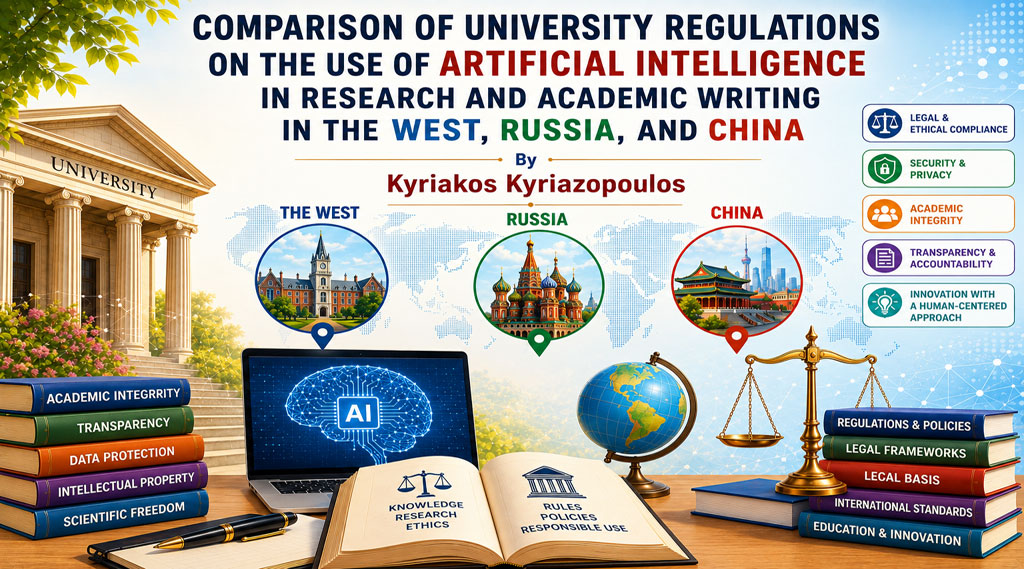
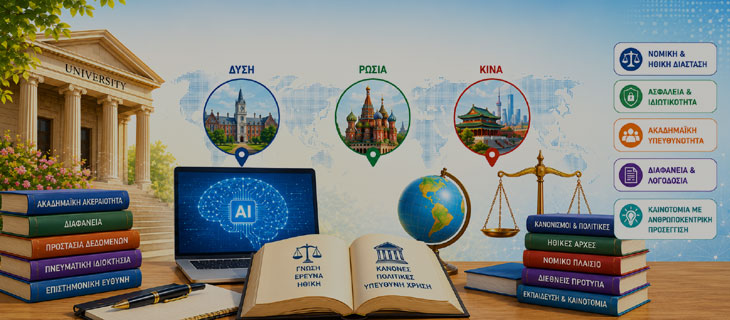
Comparison of university regulations on the use of artificial intelligence in research and academic writing in the West, Russia, and China
The emergence of Generative Artificial Intelligence in higher education constitutes one of the most profound transformations that the university has experienced since the digital revolution of the late twentieth century. The dissemination of large language models, such as ChatGPT, Gemini, Claude, and other generative artificial intelligence systems, did not merely bring about the introduction of yet another technological tool into the university process, but challenged the very manner in which the concept of knowledge, authorship, scientific authenticity, and academic work is constituted. For the first time in the history of higher education, systems appeared capable not only of searching for or organising information, but of producing continuous scientific text, synthesising arguments, developing summaries, creating bibliographical references, proposing research methodologies, and imitating to a great extent the form of human academic writing.